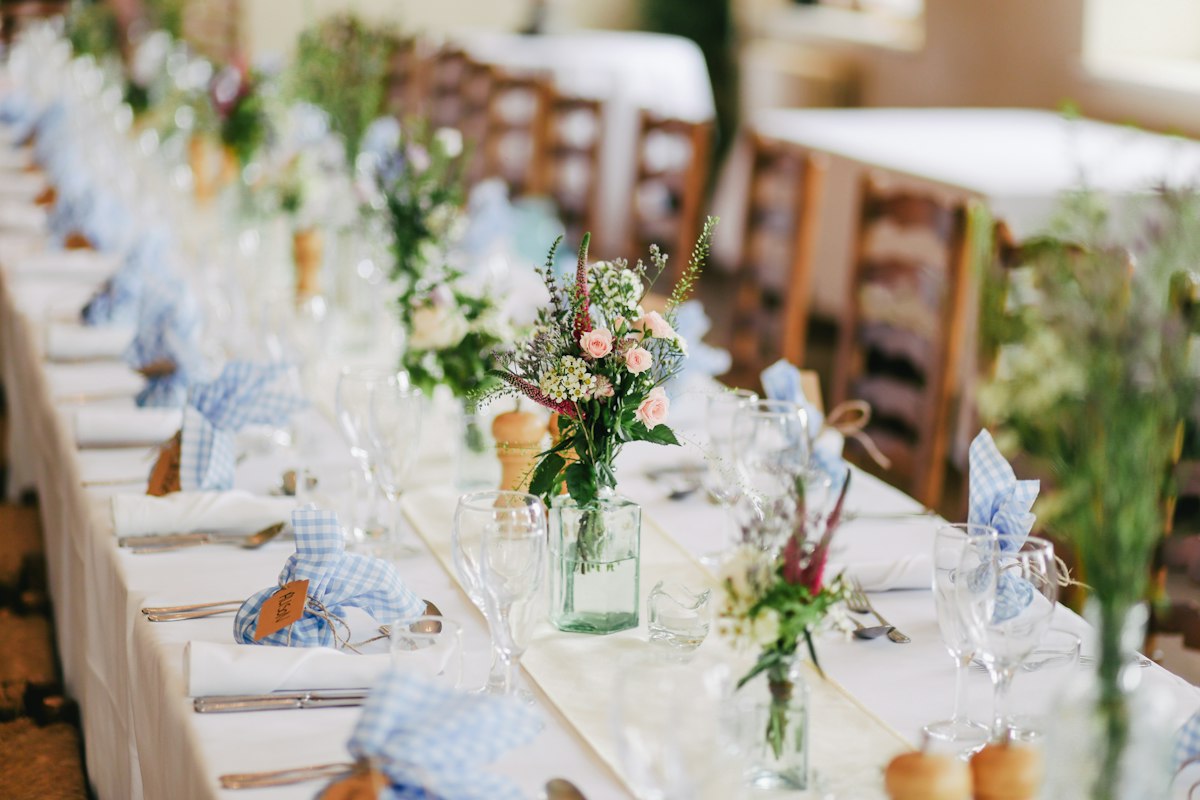
Small wedding ideas that feel special usually come down to three choices: a venue sized for your real guest count, two or three decor details done well instead of ten done cheaply, and a timeline that leaves room for actual conversation. Under 30 guests, every choice reads as intentional.
I've sat across the table from a lot of couples who assume "small wedding" means a lesser version of a big one. It doesn't. A wedding for 18 guests has room for things a wedding for 180 never will: a seated dinner where everyone actually talks to the couple, a ceremony short enough that no one checks a phone, a budget that stretches to details that matter instead of details that fill space.
Here's the thing. Small wedding ideas aren't just big-wedding ideas shrunk down. They work differently. A florist I've worked with in the Hudson Valley told me she budgets triple the flower density per table for a party of 20 compared to a party of 150, because every table is visible the whole night. That single fact changes how you should be spending your decor budget if your guest count is small.
Choose a venue that fits your number, not the other way around
Most couples pick a venue first and back into a guest list. For a small wedding, flip that. Decide your number, then find a room built for it.
A space designed for 150 guests will swallow 25 people. Round tables scattered across an empty dance floor read as under-attended, not intimate. Look instead at private dining rooms, restaurant buyouts, historic homes, and backyard setups built for 15 to 40 people. Many restaurants will do a full buyout for a $3,000 to $6,000 minimum spend, which often beats a traditional venue rental once you add catering back in.
Ask any venue directly: what's the smallest group you've hosted here, and how did the room feel? A good venue coordinator will answer honestly. If they dodge the question, that's information too.
Build the guest list first, then design around it
Small weddings fall apart when the guest list keeps creeping. Set a hard number early, thirty is a common ceiling for what most people mean by "small," and hold it. Every name added past that number changes your seating, your catering minimums, and your budget math.
Here's a method that works: list every name you're certain about first. Then add a second tier of "would be nice" names. Cut the second tier entirely if it pushes you past your number. It feels harsh for about a day. Then it doesn't.
15 small wedding ideas worth stealing
These aren't generic suggestions. Each one solves a specific problem that shows up at an intimate scale.
- Seat everyone at one long table instead of scattered rounds, so the whole group shares one conversation
- Skip the head table and sit with your guests instead
- Write place cards by hand, since 25 names takes under an hour
- Choose a tasting menu over a buffet line built for volume
- Hire a duo or trio instead of a full band, which cuts music cost by roughly half
- Use candlelight as your primary lighting instead of renting uplights meant for larger rooms
- Serve a single specialty cocktail named after a shared memory instead of a full bar
- Have a friend officiate instead of booking a stranger
- Print a one-page program instead of a full booklet
- Choose a dessert table over a tiered cake, which costs less and gives guests options
- Keep the ceremony under 15 minutes for an intimate group used to close attention
- Book a photographer for four hours instead of the standard eight
- Send guests home with a small, useful favor instead of a trinket
- Choose a Friday or Sunday date, which can cut venue cost by 20 to 30 percent
- Plan one unstructured hour with no formal activity, since small groups don't need constant programming
What a small wedding actually costs
Numbers vary by region, but a wedding for 20 to 30 guests in a mid-sized US city typically runs $8,000 to $18,000 all in, compared to a national average that regularly clears $30,000 for larger weddings. According to The Wedding Report, average per-guest spending actually rises as guest count drops, since fixed costs like photography and attire get spread across fewer people.
That's a trade worth knowing before you plan. Small doesn't always mean proportionally cheaper. It means you can spend more per guest on things like food and photography, which is exactly where most people say they'd want to spend more anyway.
Guest comfort matters even more at a small scale
With fewer guests, every discomfort is more visible. A single guest who can't hear the toasts, or who's stuck in an un-air-conditioned tent in August, stands out in a way it wouldn't in a crowd of 200. Check accessibility at your venue directly: step-free entry, accessible restrooms, and seating that doesn't assume everyone can stand for an hour.
Our guide on planning for guest comfort covers this in more depth, and our venue comparison guides walk through the questions worth asking on a tour. If budget is the piece you're still working out, start with our realistic wedding budget breakdown.
A wedding for 20 people has room for things a wedding for 200 never will.
The Bottom Line
Small wedding ideas work best when they start from your actual guest count instead of borrowed traditions built for a bigger room. Pick a venue sized for your number, hold your guest list to it, and put your budget toward the few details your guests will actually notice: food, seating, and light. A wedding for 20 has more room for warmth than most 200-person weddings ever find. Start by setting your guest number this week, before you book anything else.
Frequently asked questions
What counts as a small wedding?
Most planners use 50 guests or fewer as the general definition, with "micro weddings" referring to 10 to 20 guests specifically. There's no official cutoff, so the right number is whatever fits your venue and budget comfortably.
Is it rude to have a small wedding and exclude extended family?
No. A clear, kind explanation, such as choosing to keep the day intimate, is enough for most guests. Consider hosting a larger celebration or open house later if you want extended family included in some way.
How much does a small wedding save compared to a large one?
Total cost typically drops significantly, though per-guest spending often rises since fixed costs like photography get divided across fewer people. Expect real savings on catering, seating, and rentals more than on vendors with flat fees.
Can you still have a wedding party at a small wedding?
Yes, though many couples with under 20 guests skip a formal wedding party altogether or keep it to one or two people each. It's a personal choice, not a rule.
About Sophie Langford
Sophie believes a successful celebration should reflect the people and purpose behind it rather than follow every current trend. Her approach encourages readers to choose details that feel meaningful, suitable for the venue, realistic for the budget, and comfortable for guests.
She writes for readers planning their own events as well as professionals seeking ideas and planning resources. Her advice recognises different cultures, family structures, event sizes, traditions, and financial circumstances.
Outside her editorial work, Sophie enjoys visiting historic venues, collecting stationery, creating seasonal tablescapes, exploring flower markets, and studying how thoughtful design influences the way guests experience an event.